How to Water Tomatoes
As an Amazon Associate we earn from qualifying purchases.
Knowing how to water tomatoes well matters more than most people expect, because uneven watering is the most common cause of trouble. Extension guidance converges on a few points: water deeply, aim for about one to two inches a week, and water early in the day at the soil line. This article walks through each point with the source behind it, and it says where the sources differ.
Containers and raised beds need a slightly different approach, and the sources treat them separately. The advice below starts with in-ground plantings and then covers pots and beds.
Quick answer
- Water deeply and infrequently. The Utah State vegetable guide advises deep, infrequent watering that adds up to 1 to 2 inches per week for tomatoes.
- Water early and at the soil. The Iowa State material, republished by Ask Extension, says supplemental watering is best done in the morning, applied to the soil around the plants.
- Hold the moisture steady with mulch. The Utah State guide recommends mulch on the soil around the base of the plant to limit moisture swings.
Why steady water matters for tomatoes
The strongest warning in these sources is about consistency rather than volume. The Utah State vegetable guide says tomatoes react strongly to irregular watering, whether too much or too little, and that this can cause blossom-end rot, a dark, leathery spot on the bottom of the fruit, as well as fruit cracking. The point is not only how much water goes on but the swings between dry and soaked soil. A plant that dries out and then gets a heavy soak is in the pattern the guide describes.
That is why the schedule in this article is built around steady moisture. A plant that gets a reliable amount each week is less likely to see the swings the guide ties to blossom-end rot. The guide does not promise that steady watering prevents every problem, so treat it as the best single habit the sources agree on.
How much water per week
The numbers in these sources are close but not identical. The Utah State guide gives a range for tomatoes of 1 to 2 inches per week. The Iowa State material, read through Ask Extension, sets a baseline of one inch per week for tomatoes, and says the same for most vegetables. For in-ground tomatoes in soil that drains well, that excerpt says an inch a week is adequate. The lower end of the Utah State range matches that baseline, so the two sources are consistent. The upper end is for conditions that dry the soil faster.
Kansas State gives a different frame for raised beds. It says a raised bed should receive 1 to 2 inches of water or rainfall equivalent, applied once or twice a week in a typical summer. That gives you a choice of schedule. A single longer session each week and two shorter sessions both fit the same weekly total, so pick the pattern you can keep up. The same guide adds that above-average heat, or a bed in full sun and high wind, may call for more frequent watering.
Taken together, a weekly figure is a starting point. Use one to two inches as the planning range, start at the lower end when the soil drains well, and move toward the upper end when the bed is hot, sunny or windy.
Water deep, not just the top
Oregon State’s watering tips put depth first. They call for deep watering throughout the root zone, which encourages deep, sturdy roots, and they ask gardeners to concentrate water in the root zone. The same sheet points out that water applied between plants where the roots have not yet spread is lost to evaporation, and that it also encourages weeds. Water goes where the roots are, not onto the whole bed.
A depth target comes from the Kansas State guide for raised beds, which aims to keep the soil moist to a depth of 6 to 8 inches. Watering to that depth means a short sprinkle is not enough, and a slower, longer session is the more reliable way to get water down into the mix. The sources do not give a tomato-specific depth for in-ground beds, so the 6 to 8 inch figure is a raised-bed target.
Match the schedule to your soil
Soil type changes how often you water. Oregon State notes that sandy soil lets water run through quickly and dries out rapidly, while clay is slow to absorb water and slow to give it up. That contrast matters for how much you apply at once. The same sheet advises using an application rate that lets water soak in rather than run off the garden area, which is sensible on any soil, because runoff is water the plant never gets.
Sandy soil asks for more frequent checks, since it dries quickly. Clay soil asks for patience, because it absorbs water slowly and releases it slowly. In both cases the goal is the same: water that soaks in and stays where the roots can reach it. The Ask Extension excerpt ties the weekly inch to soil that drains well, which is the case where that baseline holds.
Containers and raised beds
Pots are a separate case. The Ask Extension excerpt says pot-grown tomatoes have different water requirements, but it does not give a figure for them. Kansas State fills part of that gap with general container advice: check container gardens daily to learn how often and how much to water. It also notes that sun and wind exposure, along with the density and maturity of the plants, change how much water is needed. For a tomato in a pot in full sun, a daily look is the simplest way to learn the pot’s own pattern.
Drainage matters in containers. Kansas State says water should run out of the bottom drainage hole of a pot. Raised beds are different because they are built to drain. The same guide says that a raised bed, being amended to be more porous, usually does not have a drainage problem. So a bed can take a full weekly soak more easily than a pot, and the pot needs a hole that lets the extra water leave.
Water in the morning, at the soil
Timing and placement go together. Oregon State advises watering early in the morning, when the air is cool, the wind is low and water pressure is higher on municipal systems. The Iowa State material says that supplemental watering is best done in the morning and applied directly to the soil around the plants. Watering the soil rather than the whole plant keeps the foliage drier. The same excerpt explains why overhead water is a poor choice: it splashes soil, which can spread common diseases such as septoria leaf spot.
The sources we opened do not compare morning and evening watering in detail. What they do say is that morning is the recommended time, and that the aim is to get water to the soil around the plant rather than onto the leaves. That is the advice this article follows.
Mulch and the moisture check
Mulch is the easiest way to steady the soil between sessions. The Utah State guide recommends mulch on the soil around the base of the plant to avoid problems from moisture swings and blossom-end rot. Mulch slows the change between wet and dry, which is the same goal as steady watering. It does not replace the schedule, but it helps the schedule hold.
Check the soil before each session rather than watering on a fixed day. Oregon State asks gardeners to check water depth and soil dryness regularly. A finger or a trowel shows whether the top few inches are dry, and the depth targets above show how far down the water should reach. The sources do not give a probe depth for tomatoes, so use the raised-bed depth of 6 to 8 inches as the reference.
Drip and hose options
If you water by drip, the Utah State guide describes two main emitter types, point source and inline. A point source emitter placed at the base of a single plant is the simplest setup for one tomato, because only that plant receives water. The guide says drip irrigation can reduce water use by up to about 50 percent, which is a claim about drip irrigation in general rather than about tomatoes specifically.
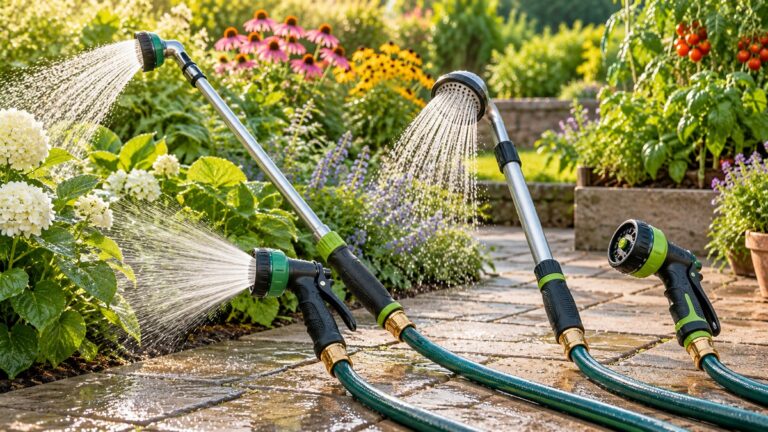
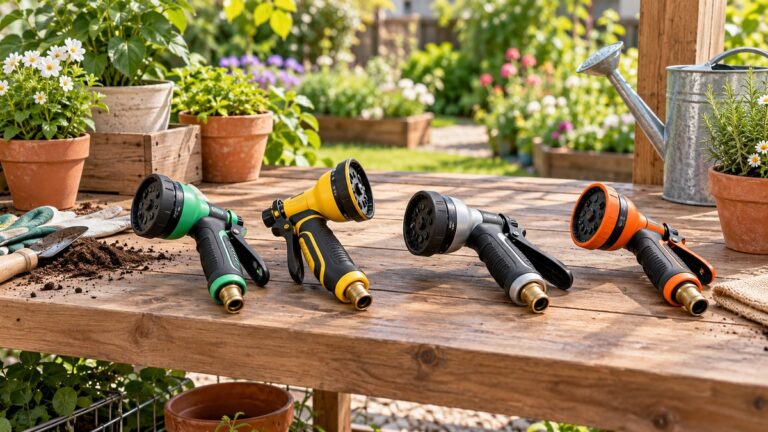
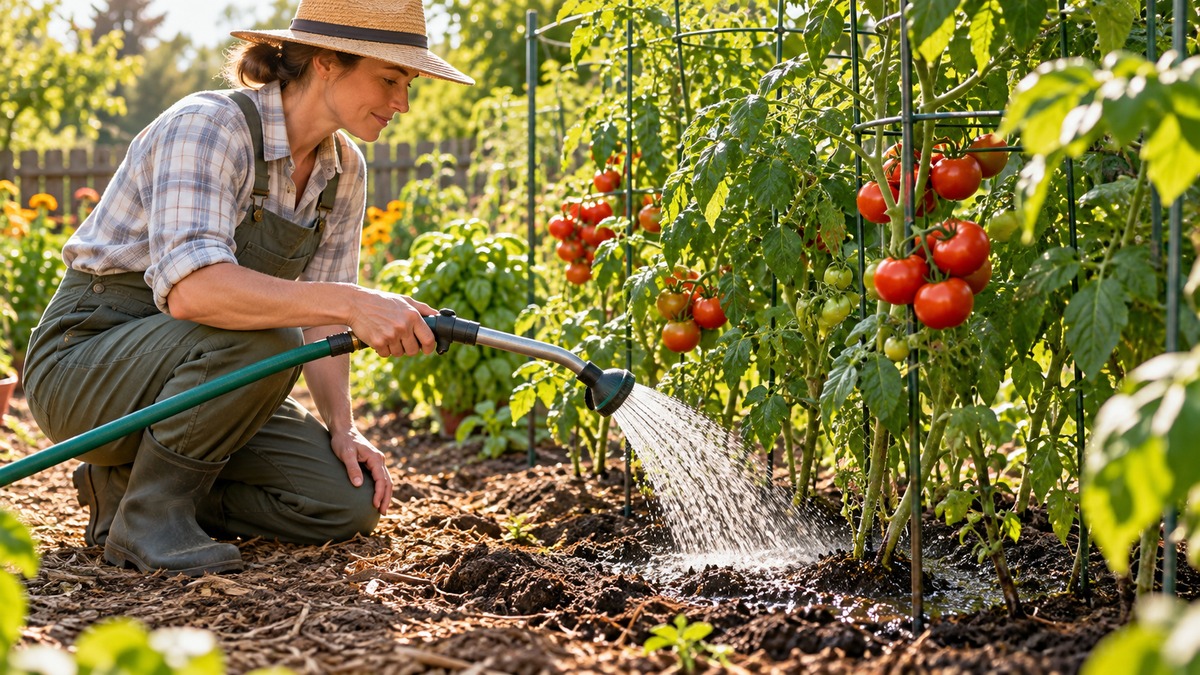
If you water by hand with a hose, the same principles apply. Water the soil at the base of the plant, keep the flow gentle, and avoid spraying the foliage. The post on garden hose nozzles for watering plants covers that choice in more detail.
A weekly routine
Put the points above into one routine. Each step comes from a source named in this article.
- Check the soil in the root zone before you water. Oregon State advises checking soil dryness and depth regularly.
- If the soil is dry, water early in the morning, applying the water to the soil around the plant.
- Aim for one to two inches in a week, following the Utah State range, and start at the lower end where the soil drains well.
- Split the weekly amount into one or two sessions, the pattern Kansas State describes for raised beds.
- Keep mulch on the soil so the moisture stays steady between sessions.
- Avoid overhead spraying, which the Iowa State material says splashes soil and spreads disease.
Common mistakes
The first mistake is overhead watering, which splashes soil and can spread disease. The second is an irregular schedule, which the Utah State guide ties to blossom-end rot and fruit cracking. The third is shallow sprinkling. Oregon State asks for deep watering through the root zone, and a light sprinkle does not reach that depth.
The fourth mistake is ignoring the container. The Ask Extension excerpt says pot-grown tomatoes have different needs, and Kansas State recommends daily monitoring of containers. A pot checked only once a week may miss the swings that matter most. If you are planning the bed itself, the post on vegetables to grow in raised beds is a related read.
How we chose
We began with extension material that addresses tomato watering directly or through general vegetable guidance. The Utah State and Oregon State pages cover vegetables and garden watering in detail, and the Ask Extension page reproduces a short Iowa State excerpt about tomatoes. Kansas State’s publication covers raised beds and containers, which are the setups many home gardeners use for tomatoes. Each source was opened with curl, and we kept only pages that returned HTTP 200. A University of Georgia tomato page and a Clemson tomato factsheet returned 403 and were left out. Commercial content farms and affiliate pages were not used.
What we could not verify
The sources give ranges and principles rather than a day-by-day plan for tomatoes. They also differ a little on the weekly figure, and this article shows both figures rather than picking one. Where the sources are silent, the article says so.
What the sources do not say
The sources do not give a day-by-day schedule for tomatoes in any climate. The Utah State drip table is built on 2-foot row spacing and is not a tomato-specific rate, so this article does not use it as one. The sources do not compare morning and evening watering in detail. They do not give a water amount for a pot of a given size. The Iowa State material was read through an Ask Extension page, not the full Iowa State article, so the excerpt is the only text this article relies on from that source.
Frequently asked questions
How often should tomatoes be watered?
The Utah State guide gives one to two inches per week, applied deeply and not on a fixed calendar day. Check the soil first, and water when it is dry in the root zone. Soil that drains well may need the lower end of that range.
Is one inch of water a week enough for tomatoes?
The Iowa State material says it is adequate for in-ground tomatoes in soil that drains well. The Utah State range goes higher, to two inches, for conditions that dry the soil faster. Heat, full sun and wind all point toward the upper end, as Kansas State notes.
Is morning or evening better for watering tomatoes?
The sources in this article recommend the morning. Oregon State advises early watering when the air is cool and the wind is low, and the Iowa State material says morning is best for supplemental watering. The sources we read do not compare evening watering in detail.
Do tomatoes in pots need more water?
The Ask Extension excerpt says pot-grown tomatoes have different requirements, without giving a figure. Kansas State says containers need daily monitoring, that sun and wind change the requirement, and that water should run out of the bottom drainage hole.
Does mulch help tomatoes?
Yes, according to the Utah State guide, which recommends mulch on the soil around the base of the plant to avoid problems from moisture swings. The guide does not give a mulch depth, so the sources leave that choice open.
Sources
- https://extension.usu.edu/yardandgarden/research/water-recommendations-for-vegetables.php (opened 2026-10-22)
- https://extension.oregonstate.edu/sites/extd8/files/documents/12281/wateringtips.pdf (opened 2026-10-22)
- https://ask.extension.org/kb/faq.php?id=872134 (opened 2026-10-22)
- https://bookstore.ksre.ksu.edu/download/watering-raised-beds-berms-containers-and-houseplants_MF2805 (opened 2026-10-22)