Best Garden Hand Cultivator: Tines, Handles and Reach
As an Amazon Associate we earn from qualifying purchases. Details
The best garden hand cultivator for a small bed is a tool with a head that matches your weeding job and a handle that lets your wrist stay straight while you work. A hand cultivator loosens the top layer of soil and scrapes or pulls up small weeds, which makes it most useful between plants and in containers. This guide compares seven cultivators from seven different brands, using the titles and bullets from one Amazon search for garden hand cultivator. It also explains what the university sources we opened say about weeding and wrist posture, and where the listings stop short of giving the answer.
Quick answer
- Match the head to the job. Multi-tine heads suit loosening the top of a bed. The Walensee listing describes a rotary wheel and weeding blade, and says the wheels work best on moist soil.
- Pull weeds while they are small. UC Cooperative Extension says weeds are easiest to control while they are tiny and emerging, so an early pass is the easiest time to act.
- Choose a handle that keeps the wrist straight. NC State Extension says a neutral wrist position can improve grip strength and reduce stress on the wrist and hand.
- Check size before you order. Only two of the seven listings give a head width or a length in the title or bullets, which is 2 divided by 7, or about 29 percent.
How a hand cultivator works on soil and weeds
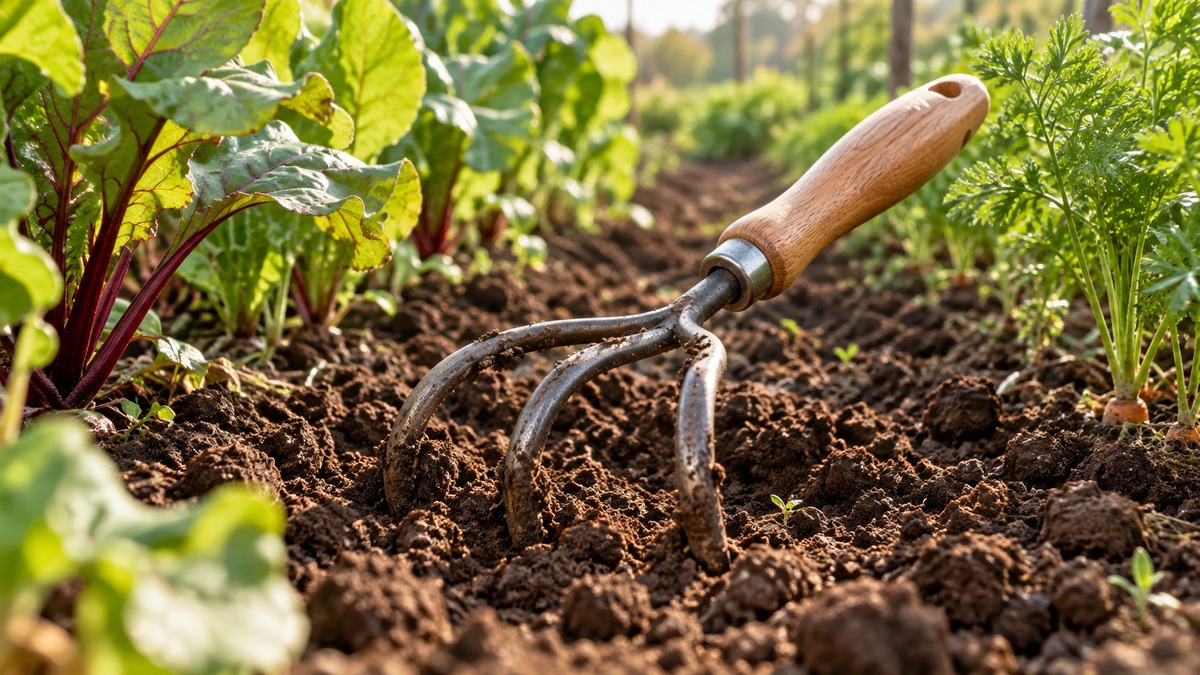
A hand cultivator is a small hand tool with tines, teeth or claws that you draw or push through the top layer of a bed. The listings make two main claims about what it does. The Fiskars listing says its deep, curved tines make it easy to loosen and aerate soil and to remove weeds. The Blossom Buddy listing says its tool breaks up soil, removes weeds and aerates garden beds. Both claims come from the sellers, so this guide treats them as descriptions rather than measured results. The sources we opened do not state a working depth for a hand cultivator, so this guide does not give one.
Scraping the surface
The UC Cooperative Extension article discusses a related tool, the swivel hoe. An IPM advisor there recommends a swivel hoe to scrape the soil surface so that weed tops are cut off, and she prefers it to herbicides partly because it is quicker than getting out spray equipment. The sources we opened do not compare a swivel hoe with a hand cultivator, so the article supports the surface-scraping method, not this exact tool.
Working while weeds are small
The same article says weeds are easiest to control when they are tiny emerging plants. A cultivator suits that schedule: a light pass across a bed while the weeds are still small, rather than a rescue for large ones. The bullets do not give a maximum weed size for any of the seven tools, so that limit is unknown.
Mulch before the weeds sprout
UC Cooperative Extension suggests spreading a three- to four-inch layer of mulch over garden beds and landscape borders before weed seeds have a chance to germinate. The same article says mulch blocks the sunlight weeds need to push through the ground. Mulch and a cultivator do different jobs. Mulch keeps seeds from sprouting, and the cultivator handles what gets through. The sources we opened do not say that mulch replaces a cultivator.
What the loosening claims cover
The Altdorff title describes detachable, thicker tines, and its first bullet describes a polished steel head. The Jardineer bullets describe six curved tines that support efficient tilling. Neither set gives a depth, a soil type or a result. Read as design descriptions, they tell you what the head is made of and how it is shaped, not how much soil it turns.
The seven listings side by side
Table 1 sets out what each title and first bullets say about head, handle, size and storage. A cell that says none stated means the listing text did not give that detail, and this guide did not fill it in.
| Brand | Head and tines | Handle and grip | Size figure stated | Storage |
|---|---|---|---|---|
| Fiskars | Stainless steel head with deep, curved tines | Softgrip handle with multiple grip positions, longer and weighted | None stated | Hang hole |
| Blossom Buddy | Three stainless steel tines | Wooden handle, described as ergonomic | “Compact”; no dimension stated | None stated |
| alanx | Three tines; title says without welding | Long oak handle | 14 inch wide tilling head | None stated |
| Walensee | Four rotary wheels with nine teeth each; manganese steel weeding blade | Adjustable long handle (bullet cut off in capture) | None stated | None stated |
| Altdorff | Polished steel head; detachable, thicker tines (title) | Reinforced three-section steel handle | 61 inch in title, not labelled | None stated |
| Jardineer | Two sizes; six curved, heat-treated high carbon steel tines | Extended handle with anti-slip foot pedal | Two-pack; no size | None stated |
| MECHEER | Three thick claws; aluminum alloy, 0.28 inch thickness | Rubber TPR grip, non-slip | None stated | Hanging hole |
Two of the seven listings give a figure for head width or length, which is 2 divided by 7, or about 29 percent. The other five name tine shapes, materials or grips, but no size. A buyer can compare reach and working width for only two of the set, so check the full product page of the rest before you order.
1. Fiskars Xact Hand Cultivator, Stainless Steel Weeder, Durable Garden Tool (Stainless steel hand cultivator with deep, curved tines)
Pros
- Deep, curved tines are described as easy to loosen and aerate soil
- Stainless steel head resists rust and will not detach from the handle
- Softgrip handle has multiple grip positions and a longer, weighted design
Cons
- The bullets give no head width, tine count or handle length
Best for: Gardeners who want a rust-resistant head with grip choices
Skip if: You need a stated size before you order
View on Amazon (affiliate link)
2. Hand Cultivator, 3-Tine Garden Rake Manual Tiller with Ergonomic Handle (Three-tine hand cultivator with a wooden ergonomic handle)
Pros
- Three stainless steel tines are described as rust resistant
- Smooth wooden grip is described for extended gardening sessions
- Compact design is described for small spaces and container plants
Cons
- The bullets state no dimension, so reach stays unknown
Best for: Container and small-bed gardeners who want a compact tool
Skip if: You need a width or length figure in the listing
View on Amazon (affiliate link)
3. 14 inch Japanese Hand Tiller/Rake for Garden, 3-tines Cultivator, Without Welding, Oak Handle (14 inch three-tine hand tiller with a long oak handle)
Pros
- The 14 inch wide tilling head is stated in the bullets
- The long wooden handle is described as giving grip and leverage
- The title says the tool is built without welding
Cons
- The bullets do not say whether the tines can be removed
- The heavy-duty wording gives no load or weight figure
Best for: Owners of medium beds who want a wide head and a long handle
Skip if: You need a narrow head for tight spaces between plants
View on Amazon (affiliate link)
4. Rotary Cultivator Garden Tool, 2-in-1 Hand Tiller & Action Hoe Garden Weeder (Rotary wheel hand cultivator with a manganese steel weeding blade)
Pros
- Four rotary wheels with nine sharp teeth each loosen garden soil
- The manganese steel blade is described for cutting, digging, edging and weeding
- The weeding blade has an adjustable angle design
Cons
- The bullets say the wheels work best on moist, prepared soil
- The handle bullet is cut off in capture, so handle details are not used
Best for: Gardeners with moist beds who want a wheel and a blade in one tool
Skip if: Your soil is hard, dry or rocky and you cannot water it first
View on Amazon (affiliate link)
5. Rotary Cultivator Garden Tool for Gardening and Lawn (61 inch), Rotary Hand Tiller with Detachable (Polished steel rotary hand tiller with detachable tines)
Pros
- The whole head is described as polished steel that will not crack
- The reinforced three-section steel handle is stated not to bend
- The title names detachable, thicker tines for the head
Cons
- The title gives a 61 inch figure without naming what it measures
- Two bullets are cut off in capture, so their claims are not used
Best for: Owners who want an all-steel head and a long handle
Skip if: You need the handle length named in the bullets
View on Amazon (affiliate link)
6. Hand Till Cultivator, 2 Pack Garden Claw Set (Two-pack hand tiller with six curved tines and a foot pedal)
Pros
- Two sizes of cultivator are included in the two-pack
- Six curved, heat-treated high carbon steel tines support tilling
- The extended handle with anti-slip foot pedal reduces constant bending
Cons
- The bullets do not say which size suits which bed
- The multi-use bullet is cut off in capture, so its full list of jobs is not used
Best for: Owners who want two sizes and a tool that limits bending
Skip if: You want a single tool with a stated width
View on Amazon (affiliate link)
7. Hand Rake Garden Tool, Heavy Duty Hand Cultivators for Gardening Weed Rake (Three-claw aluminum hand cultivator with a rubber grip)
Pros
- Three thick claws are described for loosening, cultivating and weeding
- The rubber TPR grip is described as non-slip
- A hanging hole in the handle makes it easy to store
Cons
- The bullets give no tine length or load limit for the claws
- The bullets name aluminum alloy, not steel, for the head
Best for: Owners who want a light tool with a grip aimed at wrist comfort
Skip if: You want a steel head for heavy roots
View on Amazon (affiliate link)
One calculation: the Walensee wheel count
The Walensee bullets describe four rotary wheels, each with nine sharp teeth. The count per head is 4 wheels times 9 teeth, which equals 36 teeth. The bullets do not say how much soil each tooth moves, so 36 counts teeth but does not measure work done. A useful comparison would need a soil result, and the sources we opened do not give one for this head.
Handles, bending and wrist strain
Handle design changes how much strain a job puts on your hand, wrist and back. NC State Extension says garden hand tools, including cultivators, can be designed or adapted to reduce strain on the joints. Its page suggests three questions before buying: can you keep the wrist straight, can you avoid bending by lengthening the tool, and can you get a comfortable grip. The rest of this section takes those questions in turn.
Keeping the wrist straight
NC State says a neutral wrist position can improve grip strength and reduce stress on the wrist and hand. It adds that tools allowing a neutral wrist often have a curved handle, or a handle set at right angles to the head. For a conventional tool, it describes clamp-on handles that can keep the wrist neutral. Cornell University’s hand tool slides (Professor Alan Hedge, August 2013) give the same direction in plainer terms: straight-wrist operation is always preferred, and a tool should be shaped so the hand and forearm stay in line during a hard grip. The slides also advise workers to avoid bent wrist postures where possible, and note that some tools have adjustable grips that keep the wrist in a good position.
Two listings describe handles in their bullets. Blossom Buddy describes a smooth wooden grip for extended sessions, and MECHEER describes a rubber TPR grip that its listing says reduces hand and wrist fatigue. Neither set says whether the handle is curved or set at an angle, so check the handle shape on the product page before you order. The fatigue wording is the seller’s claim, not an independent finding.
Less bending
NC State asks whether a tool can be telescoped, or lengthened with an extender or an easy-change handle, to reduce bending and reaching. The Jardineer bullets describe an extended handle and an anti-slip foot pedal that let you loosen soil without constant bending. The foot pedal is a listing feature, and the sources we opened do not compare pedal designs with other options. The Altdorff title gives a 61 inch figure, and its bullets describe a reinforced three-section handle. A long handle can cut the bending a short tool needs, but the title does not say what the 61 inch figure measures.
Grip size and fatigue
NC State also cites an Arthritis and Gardening guide for a grip rule: your thumb and forefinger should meet when wrapped around the handle. The page says a handle that is too thick can lead to fatigue. Use that rule as a check against the handle size in each listing, though most listings do not state the handle diameter.
Before you order, read each handle bullet with three checks in mind: whether the wrist can stay straight, whether the tool can be used without bending your back, and whether your thumb and forefinger can close around the grip. The listings answer these questions only in part, so the rest stays with the product page.
Choosing by job
Loosening the top of a bed
Blossom Buddy, alanx, Jardineer and Fiskars all name loosening or breaking up soil as a main job. Blossom Buddy describes its size as compact, which suits small beds and containers. alanx gives a 14 inch wide head, so each pass covers a broader strip, though the listing does not say how deep the pass goes.
Cutting and digging weeds
Walensee and MECHEER are the two sets aimed at weeds with roots. The Walensee blade is described for cutting, digging, edging and removing weeds with roots, and its angle adjusts. MECHEER’s three claws are described for loosening, cultivating, digging and weeding, with deep and curved tines. Both fit the early-pass method above, because the UC article says small weeds are the easiest to control.
Long reach and bigger jobs
Altdorff’s title names gardening and lawn use, and its bullets describe a steel handle that is stated not to bend after long use. Jardineer’s two-pack includes two sizes, which gives a choice of reach. Neither set gives an area or coverage figure, so compare them on handle length and size rather than on how much ground each covers.
Mistakes to avoid
- Working dry, hard or rocky ground without preparing it. The Walensee bullets say its wheels work best on moist, prepared or lightly compacted soil, and advise watering or pre-loosening very hard, dry or rocky ground first.
- Waiting until weeds have grown large. The UC article says small, emerging weeds are the easiest to control.
- Choosing by the head alone. Only two listings state a size, so the handle and grip deserve equal attention.
- Working bent over with a short tool. The NC State page suggests asking whether the tool can be lengthened, so add that question to your list.
How we chose
We searched Amazon.com for garden hand cultivator in Chrome on 2026-10-21 and read the titles and bullets on the listing pages that came back. We kept listings whose product type matches the keyword, meaning hand-held cultivators, including rotary hand cultivators, and tools whose title names a cultivator function. Accessories, unrelated tools and second listings from a brand already chosen were left out. The research set holds seven listings from seven brands, so each brand appears once.
Titles and bullets are the only product details in this guide. No product page in the capture showed a specification table, so every size, material and handle detail here comes from the words the listing gave. Where a bullet was cut off in capture, the cut-off text was not used. The table follows the order in our capture and is not a ranking.
To check the advice, we opened three non-Amazon pages: NC State Extension, UC Cooperative Extension and a Cornell University ergonomics course deck. Each claim taken from these pages was checked against the fetched copy.
What we could not verify
- Real-world performance. The sources we opened do not give a real-world performance result for these seven products. Chrome captured titles and bullets only, with no specification table on most pages, so this guide cannot say which cultivator loosens soil best.
- Working depth and soil type. The sources do not say how deep a hand cultivator should work, or how it handles clay, sand or compacted soil. The listings give no figures for either.
- Size and weight. Only alanx and Altdorff give a figure in the title or bullets, and the Altdorff figure is not labelled. No listing states a weight.
- Durability. Rust resistance, the steel that will not crack and the no-bend claim are the sellers’ own statements. The sources we opened do not cover these products.
- Cut-off text. The Walensee handle bullet, two Altdorff bullets and the last Jardineer bullet were cut off in capture, so their text is not used.
- Source age and scope. The UC article dates from April 2016, the NC State page from 2020 and the Cornell slides from August 2013. None of the three covers hand cultivators as a product category.
FAQ
What is the difference between a hand cultivator and a garden fork?
The sources we opened do not compare the two tools directly. The listings in this guide describe tines, teeth or claws for loosening soil and pulling small weeds within a bed, not a larger digging tool. If you need a tool for turning over a bigger area of soil, see our garden fork guide. The bullets in this set do not claim the cultivator can replace a fork.
Can a hand cultivator pull up weeds that have roots?
Some listings say so. The Walensee weeding blade is described for removing weeds with roots, and the MECHEER claws are described for weeding. The UC article says weeds are easiest to control while they are tiny emerging plants, so early removal is the time the sources support most clearly. The bullets do not give a maximum root size or weed height, and the sources we opened do not give one either.
How do I keep my wrist straight when I use one?
Look for a handle that is curved, or set at right angles to the head. NC State Extension says that shape helps keep the wrist neutral, and it describes clamp-on handles that can be added to a conventional tool. Cornell’s slides say straight-wrist operation is always preferred and note that some tools have adjustable grips. Check the handle shape in each listing first, because most of the bullets in this set do not describe it.
Should I choose a rotary model or a multi-tine model?
Pick by job. The rotary heads from Walensee and Altdorff are built around a rotating head, and the Walensee bullets say its wheels work best on moist soil. Multi-tine heads from Blossom Buddy, alanx and Jardineer are described for breaking up and loosening beds. Choose a rotary model if your beds are moist and you want a blade for weeds with roots. Choose a multi-tine model if your main job is loosening the top of a bed.
Does mulch replace a hand cultivator?
The sources we opened do not say so. UC Cooperative Extension suggests a three- to four-inch layer of mulch before weed seeds germinate, and mulch blocks the light weeds need. Mulch cuts down the number of seedlings that come up, which leaves less for a cultivator to handle. For planting holes or small transplants, a hand trowel is the better tool, since a cultivator is described for loosening and weeding rather than planting.
Does a longer handle help my back?
The sources we opened do not measure back strain for any tool. NC State asks whether a tool can be lengthened to cut down on bending, and the Jardineer bullets describe an extended handle that avoids constant bending. A longer handle may cut the bending a short tool needs, but most listings in this set give no handle length, so check the bullets before you order.
Bottom line
Buy the cultivator whose listing confirms both a head that fits your weeding job and a handle that lets your wrist stay straight. If the bullets confirm only the head, look for a handle description before you order, and skip the listing if you cannot find one.
Sources
- NC State Extension, Extension Gardener, “Ergonomic Tools for Gardening” (2020): https://extensiongardener.ces.ncsu.edu/2020/08/ergonomic-tools-for-gardening-2
- UC Cooperative Extension, UC Weed Science blog, “Control garden weeds in early spring” (2016): https://ucanr.edu/blog/uc-weed-science-weed-control-management-ecology-and-minutia/article/control-garden-weeds-early
- Cornell University Ergonomics Web, Professor Alan Hedge, “Hand Tool Design” slides (2013): https://ergo.human.cornell.edu/studentdownloads/DEA3250pdfs/Hand%20Tools.pdf