DIY Covered Bird Feeding Station
As an Amazon Associate we earn from qualifying purchases. Details
A roof over a feeding station can help keep seed dry, although the sources below only address weather protection for hopper feeders. This guide shows how to build one at home, where to place it, and how to keep it clean. The placement and cleaning steps come from two university extension pages that we opened. Neither page recommends a roof or cover for feeders, so the roof in this design is a DIY choice, not an extension recommendation. No product is required to follow the plan.
Quick answer
Build a platform or tray with drainage holes, add a roof that overhangs the seed area, and place it about 10 feet from trees or shrubs that give birds cover. Scrub the tray with soap and disinfectant once a week. Put out only about one day’s worth of seed at a time. Keep the roof and tray dry and clean, because the extension sources say platform feeders are not weather-resistant and need drainage.
What the sources say
Penn State Extension, updated August 5, 2024, says platform feeders should be scrubbed with soap and disinfectant once a week, and that platform feeders need frequent cleaning to remove droppings. It says platform feeders are not weather-resistant and should have drainage holes. It also says hopper feeders protect seed from weather. Illinois Extension, published February 2, 2026, says that a flat feeder with a wide bottom suits ground-feeding birds, and that it can hang from a limb or sit on a pole about ten feet from a tree or fence to help deter squirrels. Illinois also says feeders should be cleaned regularly because many birds gather at them each day.
Step 1: Choose the design
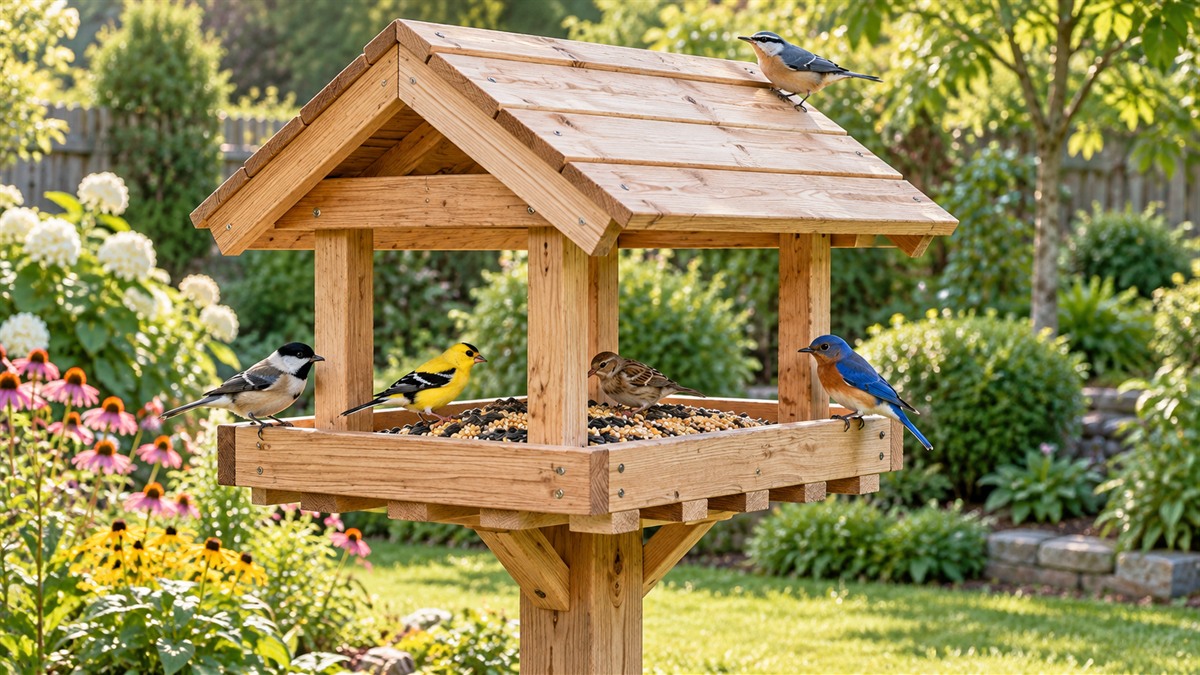
Pick one of two designs. A platform with a roof suits ground-feeding birds, which Illinois says a wide-bottomed flat feeder allows. It has a flat tray with drainage holes and four posts or side walls to hold a roof. A hopper with a roof keeps seed inside a box, which the Penn State page notes protects seed from weather. Both designs need a roof. The sources do not say how big the roof should be, so the measurements in step 2 are a starting point, not a source figure.
Step 2: Build the frame and roof
- Tray: a flat board with several drainage holes drilled in the bottom. Penn State says platform feeders should have drainage holes; the number and size of holes are your choice.
- Roof: a sheet or board that overhangs the tray on every side. The sources give no roof size, so choose an overhang that keeps rain off the seed area.
- Posts: attach the roof to four short posts or to the side walls of the tray, so the roof sits above the seed area.
Step 3: Place the station
Illinois Extension says a flat feeder can hang from a limb or sit on a pole about ten feet from a tree or fence to help deter squirrels, and that a window feeder should sit on a pole or a tree about ten feet from the house. Penn State Extension says to place feeders where you can see them from a frequently used window and within about 10 feet of trees or shrubs that give birds cover. Conflict: the Penn State page also says to keep feeders within about 3 feet of windows so birds do not hit the glass hard. The two sources disagree on window distance. Choose a spot that meets the cover rule and check the window distance yourself.
Move feeders away from low shrubs or branches where cats could hide. Penn State says this directly.
Step 4: Fill with the right seed
Penn State says black-oil sunflower seed is the best single choice because smaller birds can open its thin shell easily. Striped sunflower is harder for small birds to crack and its shells make a mess. Hulled sunflower avoids the mess but costs more. Inexpensive mixes often contain wheat, milo, oats, rice and rye, which birds tend to leave behind. Illinois Extension says to check a mix label for high milo content. Store seed in a cool, dry place, and discard seed that is moldy or has insects.
Step 5: Clean on a schedule
Penn State says to scrub platform feeders with soap and disinfectant once a week. Illinois says feeders can go in the dishwasher or be washed with hot water and dish soap, and that bleach is an option if it is rinsed thoroughly afterward. For ground-feeding areas, rotate the feeding spot and rake up droppings and debris regularly. For hanging tube feeders, the Penn State page gives no set interval. It says to empty and scrub inside to remove mold and residue.
Worked example: one week at a platform station
Suppose you fill a platform tray with a day’s worth of seed on Monday, as Penn State advises for platform feeders. By Sunday the seed is either gone or left to sit. You scrub the tray once that week with soap and disinfectant, which is the weekly interval the source gives. If droppings build up between scrubs, rake the spot and rotate the feeding area. The example uses only the amounts and intervals from the sources.
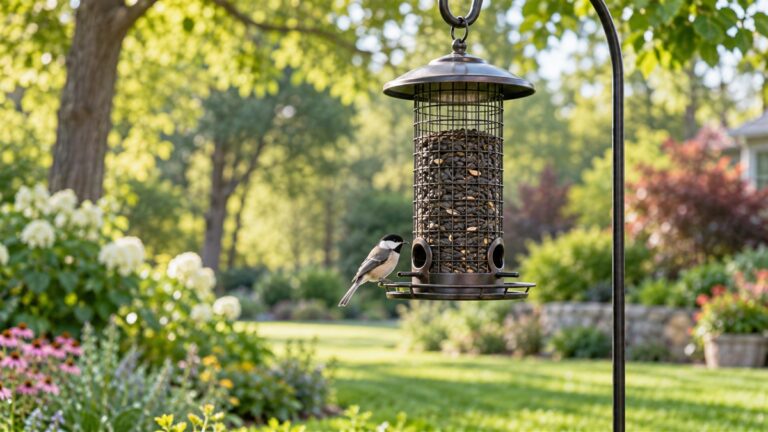
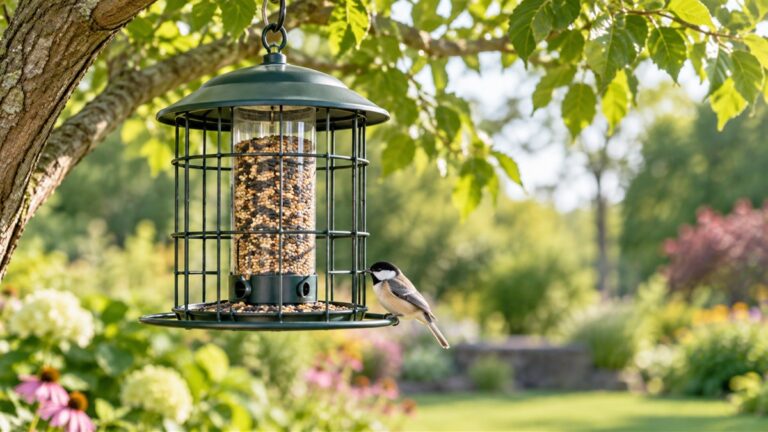
Size reference. The sources do not give tray or roof sizes, so two Amazon listings opened on 2026-10-17 serve as a size reference only. The Kingsyard Squirrel Proof Caged Platform Bird Feeder for Small Birds (B0C3H4J31J) states a 4 inch raised platform, a tray of 13.3 by 10.2 inch and mesh openings of 1.5 inch. The Mosloly Caged Bird Feeder (B0B284ZL87) states a 3 lb seed capacity and a 16.5 inch dimension in its bullets. The Upgraded Caged Bird Feeder (B0DNCRML7K) offers grille settings of 1.12 inch, 1.35 inch and 1.58 inch. Use these numbers to judge scale, not as a build requirement.
Mistakes to avoid
- Filling the tray for several days. The source says one day’s worth on a platform.
- Using a cheap mix with filler grains. Birds often leave them behind, and the waste builds up under the station.
- Skipping the drainage holes. The source says platform feeders need them.
- Putting the station near low cover where cats can hide.
Who should skip building one
If you only want a few birds and do not have space for a roofed station, a simple tube feeder may suit you better. A station that is not cleaned on schedule can spread droppings, so skip it if you cannot clean weekly.
FAQ
Do the sources recommend a roof?
No. Penn State says hopper feeders protect seed from weather, and it says platform feeders should have drainage holes. Neither page recommends a roof for a platform.
How often should I clean the station?
Penn State says once a week for platform feeders. Illinois says clean regularly because many birds gather each day.
Where should I place it?
About 10 feet from trees or shrubs with cover, away from low shrubs where cats could hide. Check the window distance, because the Penn State and Illinois pages disagree.
How much seed should I put out?
Penn State says about one day’s worth at a time on a platform feeder.
What seed should I use?
Penn State names black-oil sunflower as the best single choice, and Illinois says to check mixes for high milo content.
Bottom line
A covered platform is a sensible DIY project if you can keep it clean. Build a tray with drainage holes, add a roof that overhangs the seed, place it about 10 feet from cover, and clean it weekly. The roof is your own design choice, because neither source recommends one.
Related guides
- DIY bird feeder from a plastic bottle
- DIY bird feeder from a milk jug
- DIY PVC bird feeder pole
- DIY squirrel baffle for a bird feeder
- Cleaning bird feeders with vinegar