Simple Trending Indoor Outdoor Metal Plant Stand Review
As an Amazon Associate we earn from qualifying purchases.
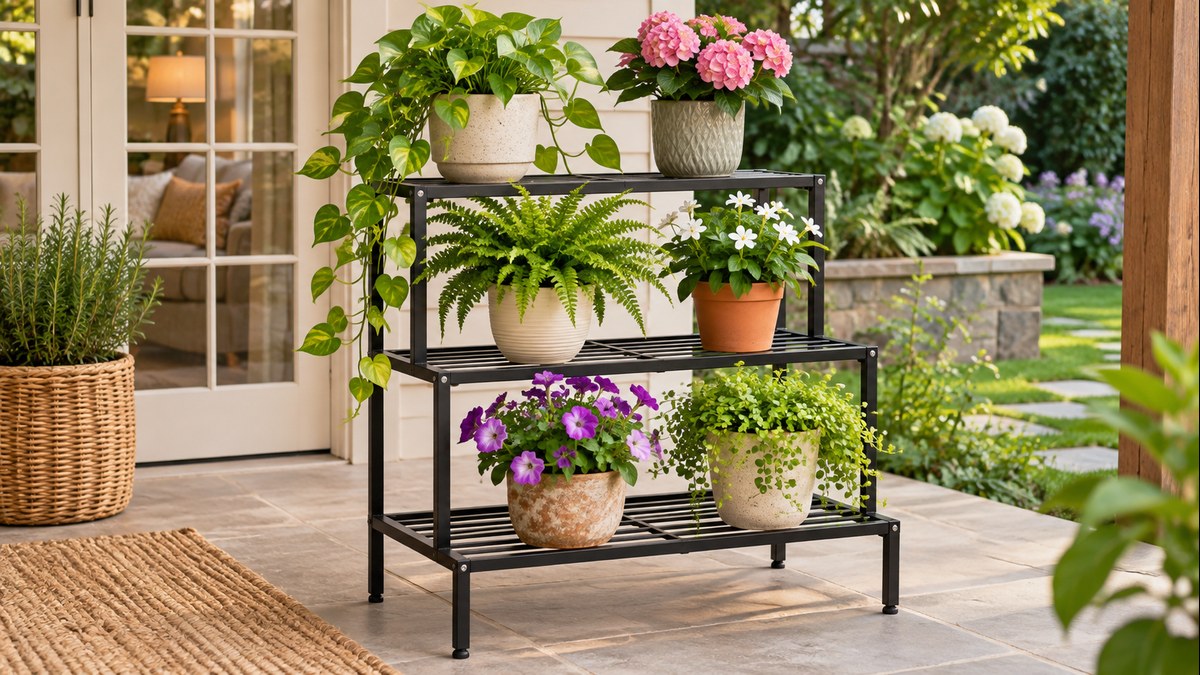
This Simple Trending metal plant stand review covers a black metal shelf that the product page describes as a 7 tier heavy duty plant stand for multiple pots. The listed dimensions are 39 by 11.75 by 30.75 inches, and the item weighs about 10.74 pounds. This review covers what the listing says about capacity and coating, what university extension guidance says about pot drainage and saucers, and which claims could not be checked from the sources. It does not report load tests and does not repeat prices or ratings.
Quick answer
- The listing describes a black iron stand, 39 inches wide, 11.75 inches deep and 30.75 inches tall, with a rated capacity of 240 pounds.
- The bullets say the stand holds 11 to 25 regular-size pots and suits both indoor and outdoor use, with an anti-rust waterproof coating.
- Extension guidance supports drainage holes, raised pots and emptied saucers, which are the practical concerns for a multi-pot shelf.
- The capacity, coating and assembly claims are seller statements, and this review could not confirm them independently.
What the listing says
The product title and bullets describe a heavy duty metal plant stand designed to show several plants or decorative items in one place. The page gives the color as black, the material as metal and the brand as Simple Trending. The item weight is listed as 10.74 pounds, and the dimensions are 39 by 11.75 by 30.75 inches. The bullets add that the bottom of the stand has a protective pad to prevent scratches on the floor.
The capacity bullet says the stand can hold 11 to 25 regular pots, with a single board able to carry a tall pot. It also states a maximum weight capacity of 240 pounds. The material bullet says the stand is made of 100 percent pure iron with a waterproof anti-rust coating, and that it suits both indoor and outdoor use. The assembly bullet says that clear instructions and videos make assembly easy, that a build can take less than 15 minutes, and that all the tools needed are supplied.
These are the seller’s statements. The page does not give a test method for the 240 pound rating, does not say how that figure is distributed across the tiers, and does not name the coating process. The statements are the only source for those details.
Footprint and placement
A 39 inch wide, 11.75 inch deep stand takes up more floor space than a narrow corner unit but less than a wide shelf. It suits a wall beside a window, a corner of a patio, or the end of a porch rail where several pots need a shared home. The 30.75 inch height keeps the top tier within easy reach from the floor, which makes watering and rearranging plants simpler.
Plan the layout before placing the pots. The listing says a single board can hold a tall pot, but the spacing between tiers is not given. Measure the tallest pot you plan to use, including its saucer, and confirm it fits under the next tier. A tier that is too close to the pot above it will make watering difficult and can trap water.
Because the stand is open, water from upper pots can run down to the lower pots and onto the floor. The next section explains how to reduce that risk.
Drainage and saucers
Drainage is the single most important factor for plant health on any multi-pot stand. The University of Illinois Extension explains the basic need: “It allows water in the soil to drain freely so adequate air is available for the roots.” It also warns about a common problem with decorative pots: “Beware of pots with permanently attached saucers where emptying the overflow is difficult or impossible.” On a stand, a saucer that cannot be emptied is an even greater risk, because the water sits where the lower pots are.
A University of Maryland Extension publication offers a practical rule for saucers: “After watering, don’t forget to empty saucers or any other container under the pot used to catch water.” The same publication recommends raising pots off the surface, saying “To help with drainage, it is advisable to use potting feet or a brick to raise pots off the ground.” On a metal stand, raising the pot also keeps the bottom from resting directly on the metal, which can trap moisture.
The listing does not say whether saucers are supplied, so plan for pots with drainage holes and saucers that can be emptied. Empty each saucer after watering, and check the metal under the pots for standing water.
Coating and outdoor use
The listing says the stand has a waterproof anti-rust coating and is suitable for outdoor use. For a buyer who plans to leave the stand on a patio through a season of rain, the coating is the most important claim. The page does not describe the coating system, its thickness, or any weathering test. The claim that the stand will not rust in a humid environment is a seller statement.
A practical approach is to check the stand at the start and end of each season. Look for scratches in the coating, loose connectors and any rust at the joints. Keep standing water off the metal, and do not leave saucers full in wet weather. Those steps help any metal stand last longer, whatever coating it has.
Assembly and stability
The listing says assembly takes less than 15 minutes and that all tools are included. Assembly times depend on the buyer, and this page gives no evidence for the 15 minute figure. A buyer should lay out all parts, follow the instructions in order, and check that each tier is level and firm before adding pots. The page says the stand is sturdy, and the 240 pound rating suggests a robust frame, but a stand’s stability depends on setup as much as on the frame.
Because the stand is light for its height, it should be anchored or placed against a wall if it will be used in a windy outdoor spot. The listing does not mention anchoring hardware, so the buyer should plan any wall or floor fixings separately.
Who this stand suits
This stand fits a gardener who wants a multi-tier shelf for a collection of small and medium pots, with space for decorative items on the lower tiers. It is a practical choice for a sunny patio or a bright indoor room, as long as the pots drain well and the floor is protected by the pad on the base. The listing’s own examples include bonsai and other decorative items, so it may also suit a collection that is not all plants.
A buyer with very heavy pots, such as large soil-filled containers, should compare the total planned load with the 240 pound rating and should spread the weight across the tiers rather than loading the top shelf. The listing does not explain how the rating applies to each tier, so a conservative approach is safer.
For ideas on arranging several pots on a shared stand, the guide to growing herbs in pots covers spacing and light, and the guide to growing cucumbers in containers covers larger pots that need steady watering.
Practical checklist
Before buying, measure the 39 inch width and 11.75 inch depth against the space, check the height against the tallest pot you plan to use, and total the weight of the pots you intend to load. After delivery, assemble the stand on a level floor, add a saucer under each pot, and place the heaviest pots on the lower tiers. Empty saucers after watering and check the coating and joints each season.
How we chose the sources
The sources were chosen from two university extension publications that opened without errors on 2026-10-27 and that address drainage and saucers for pots. Each quote was checked against the fetched page text. Neither source covers this specific product or metal plant stands, and this review does not include product testing.
Frequently asked questions
What does the 240 pound rating mean?
The listing states a maximum weight capacity of 240 pounds, but it does not explain how the figure applies to each tier, and no independent test is reported.
Do pots need saucers?
Extension guidance says saucers under pots should be emptied after watering, and that pots with permanently attached saucers can cause problems. The listing does not say whether saucers are included.
What we could not verify
The listing makes several strong claims about capacity, coating and assembly time. The sources checked for this review support general drainage and saucer guidance, but they do not confirm any of the product-specific claims.
What the sources do not say
The University of Illinois and University of Maryland publications describe drainage, saucers and raised pots in general. Neither discusses this manufacturer, this stand, its 240 pound rating, the 11 to 25 pot capacity, or the coating process. They do not give a test for a metal stand’s weathering or a guide to how a load rating applies to each tier. The statements that the stand is 100 percent pure iron, that it will not rust in a humid environment, and that assembly takes under 15 minutes are therefore unverified seller claims.
The listing also does not give the spacing between tiers, the maximum height of a pot that fits each tier, whether saucers or anchoring hardware are included, or what the warranty covers. These points should be confirmed with the seller or the manual before buying, especially if the stand will be used outdoors.
Sources
- University of Illinois Extension, “Container Drainage Options”, https://extension.illinois.edu/container-gardens/container-drainage-options (opened 2026-10-27): supports the drainage and saucer guidance.
- University of Maryland Extension, “Types of Containers for Growing Vegetables”, https://extension.umd.edu/resource/types-containers-growing-vegetables (opened 2026-10-27): supports the advice to empty saucers, raise pots off the ground and avoid gravel for drainage.