Bio Ethanol Tabletop Fire Bowl: Safe Refilling and Placement
As an Amazon Associate we earn from qualifying purchases. Details
Updated 19 October 2026 | Author: Editorial team, homelycapers.com
Someone shopping for a bio ethanol tabletop fire bowl usually wants to know one thing first: can it be used safely, and how. The short answer is yes, but only with a routine. Refill it only after the flame is out and the bowl is cool, keep the bowl stable and out of reach of children and animals, and never pour fuel while any flame or ignition source is nearby. The rest of this guide explains each step and says which parts the sources we opened do and do not cover.
Quick answer
- Never refill a lit or hot bowl. Norway’s DSB says “Do not fill bioethanol when the fireplace is burning or hot.” The NSW Fair Trading page says that “Refuelling when a flame is present or when the device is still warm can lead to an explosion.”
- Keep ignition sources away while you refill. DSB advises to “Avoid candles or other ignition sources nearby when filling bioethanol.”
- Use a container with a flame arrester. NSW says “Only use a fuel container with a flame arrester or an automatic fuel pump.”
- Set the bowl where it cannot tip and children and animals cannot reach it. DSB says “Place the bio fireplace so that it cannot tip over,” and “Place the bio fireplace out of reach of children and animals.”
What a bio ethanol bowl burns
The NSW Fair Trading page explains the category. It says “Decorative alcohol fuelled devices (often called ethanol burners and ethanol fireplaces) are sold for heating and display purposes.” The fuel is usually a liquid alcohol. In NSW’s words, “The most common form is methylated spirits, often marketed as bio-ethanol or eco-fuel.” That matters because the label on the bottle may say bio ethanol, eco fuel, or methylated spirits, and all of these describe the same kind of liquid fuel. Read the label on the container you buy and confirm it is the fuel the bowl’s manual names.
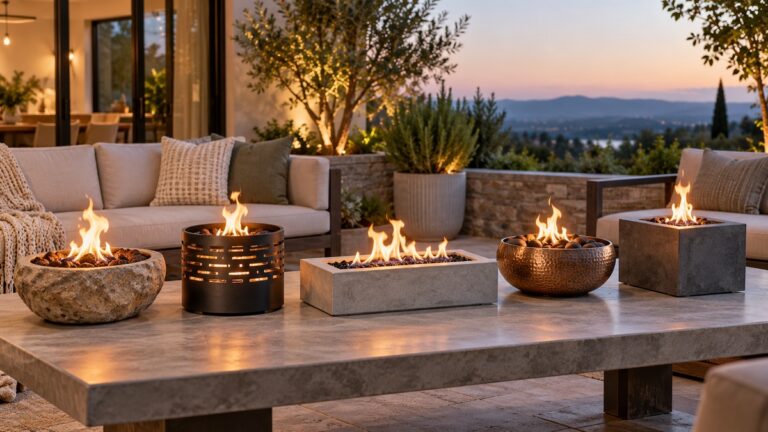
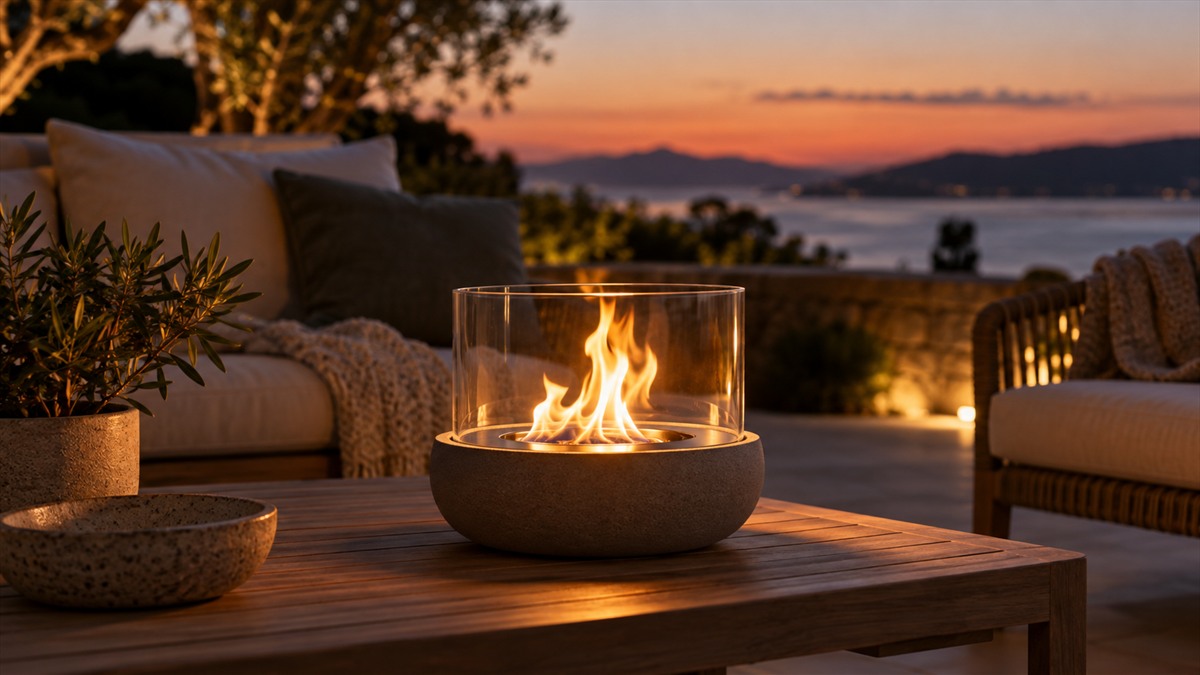
A tabletop bowl is a small, open-topped version of the same idea. The bowl holds a fuel reservoir, a wick or burner surface, and a flame that can be hard to see in daylight. DSB describes the flame like this: “Bioethanol is highly flammable and burns with a faint, blue flame that can be very difficult to detect.” The same point appears in the NSW guidance: “When fuel is low, the flame can appear blue or clear, making it difficult to see.” A bowl can therefore look out while it is still burning, and that is the reason most refill rules are written around the flame, not the look of the bowl.
Why refilling causes most of the harm
Refilling is the step the sources flag most often. DSB says “Most burns occur due to incorrect filling.” NSW states that “Filling an alcohol fuelled device while lit has caused severe burns and deaths.” Both sources describe the same mechanism in different words: fuel vapor from a hot or lit bowl can ignite when fuel is added. DSB’s warning is the clearest version: “If you put bioethanol on a bio fireplace or table fireplace that is burning, it can become an explosive fire. You must therefore be absolutely sure that the flame is extinguished before you fill up with bioethanol.”
Two points follow from this. First, the time of refill is the risk point, not the time of lighting. Second, a bowl that was just used may still be too hot to refill safely, even if the flame is gone. NSW tells you to check both things: “When refilling first check the flame is extinguished and that the device is cool.” The page does not give a waiting time, so rely on the bowl’s manual for the cooling period, and on a hands-on check that the metal is cool to the touch.
A refill routine, step by step
The steps below put the NSW and DSB advice into one order. They do not replace the manual for your bowl, and the sources do not describe every bowl design, so where a step depends on the bowl’s construction the manual decides.
- Plan the refill before you light the bowl. Decide how much fuel you will need so you do not have to add fuel mid-burn. DSB’s tips do not give a volume beyond the bottle size noted in step 7.
- Extinguish the flame completely. NSW says to “extinguish flames completely and check the device is cool before refilling.”
- Wait until the bowl is cool. Do not refill while the bowl is burning or hot, as DSB advises. Check the outside of the bowl by hand before you start.
- Clear the area. DSB says to “Avoid candles or other ignition sources nearby when filling bioethanol.” That includes lit candles, pilot lights, and a second burner in the same room.
- Remove the fuel reservoir if the design allows it. NSW says “if possible, remove the fuel tank from the device before refilling.” Refill away from the bowl when you can.
- Use the right container. NSW says to use only a container with a flame arrester or an automatic fuel pump. A plain bottle does not meet that description.
- Refill from small bottles. DSB’s tips include “Refill from 1 liter bottles.” A smaller bottle gives you more control over how much you pour.
- Clean any spill before you light again. DSB says “In case of spillage, make sure to dry up properly.”
- Return the bowl to its place and check it is stable before lighting.
Do not skip a step. If the bowl is still warm or the flame is still visible at step 3, stop and wait. Do not try to speed the process by pouring while it cools.
The flame you may not see
The visibility problem deserves its own section because it is the reason many refill accidents happen. NSW writes that “be aware that flames can be difficult to see, particularly in sunlight or in bright conditions.” DSB says the bioethanol flame is faint and blue. Together these two points mean that a bowl in bright daylight on a patio can be burning without an obvious flame, and a bowl that appears out may still hold heat.
Treat the bowl as lit until you have checked it. A simple habit helps: before any refill, pass your hand over the bowl at a safe distance, check the reservoir for heat, and look for any flicker in shaded light. Do not rely on the flame alone.
Placement and safety around the bowl
Placement covers two separate risks: the bowl tipping over, and anyone or anything near it. DSB’s list covers both. The bowl should sit where it “cannot tip over,” and it should be “out of reach of children and animals.” NSW says that these devices “can be hazardous when children and pets are present, and when they are being refuelled.”
Other checks come from the NFPA’s guidance on fire pits. The NFPA page is written for outdoor fire pits, not tabletop burners, so use it as a general placement check and not as a rule for your bowl. It says to “Place the fire pit on even ground or a level surface that will not catch on fire, such as patio blocks, bricks, or concrete.” It also says “Only use fire pits outdoors and at least 10 feet (3 meters) from anything that can burn.” For a tabletop bowl, the same principle applies: keep the bowl off soft or flammable surfaces, and keep anything that burns well away from it.
| Check | What the sources say | Source |
|---|---|---|
| Stable, level surface | The bowl “cannot tip over”; the NFPA advice is an even, level surface that will not catch fire. | DSB; NFPA |
| Out of reach | Keep the bowl “out of reach of children and animals.” | DSB; NSW |
| Clear of things that burn | NFPA gives “at least 10 feet (3 meters)” for outdoor fire pits. | NFPA (outdoor guidance) |
| No flame or ignition source during refill | Avoid “candles or other ignition sources nearby.” | DSB |
| Attended while burning | “Never leave the fireplace when it is in use.” | DSB |
The 10 feet figure is the NFPA value for outdoor fire pits. The sources we opened do not give a clearance distance for a tabletop bioethanol bowl, so treat it as a conservative starting point and follow the manual for the bowl you own.
Buying a bowl and checking the fuel
The NSW page covers a regulation for devices sold in Australia. It says “A mandatory safety standard for decorative alcohol-fuelled devices sold in Australia was introduced in July 2017.” It then tells buyers to “check with the retailer that the device complies with the safety standard.” If you are outside Australia, the standard does not apply to you, but the same question works for any seller: ask what the bowl is rated for, whether it includes a fuel container with a flame arrester, and whether the manual gives a refill procedure.
The DSB tips also ask you to check the product itself. One of the ten tips is “Check that the bio fireplace has visible warning markings.” Read the warnings on the bowl and the bottle before first use. A bowl with no printed instructions is a reason to ask the seller for the manual before buying.
Finally, consider the rest of the setup. DSB asks for “Ensure good ventilation.” It also says “Never leave the fireplace when it is in use” and “Do not move the bio fireplace when it is in use.” Build those rules into how you use the bowl, not only into how you refill it.
Using the bowl day to day
Good habits reduce the number of refills you need and the number of times you have to judge whether the bowl is safe to handle. Fill the bowl before lighting, so you refill only when it is cold. Keep the bottle and the funnel, if you use one, away from the flame. Clean spills right away, because DSB says to “dry up properly” after any spillage. Do not move the bowl while it is burning. If you need to leave the area, put the flame out first and wait for the bowl to cool.
For a different kind of outdoor fire, see our guide to round fire pit table top covers. For a larger gas-fueled setup, see our guide on propane tanks for a gas fire pit. Those products use different fuels and different safety rules, so do not apply the bioethanol refill steps to them.
How we chose
This guide covers one question: how to use a bio ethanol tabletop fire bowl safely, with a focus on refilling, flame visibility, and placement. We opened pages from a Norwegian government safety agency (DSB), a state government in Australia (NSW Fair Trading), and a US fire-safety organization (NFPA). We chose these because they are official safety bodies and because they describe bioethanol or alcohol-fuelled burners directly. For the NFPA page, we used only the placement principles that apply to any open flame, and we say so where we apply it.
We excluded retailer listings and product pages, because the question is about use, not about buying a specific bowl. We did not use any Wikipedia page for a safety or procedure claim. Where a time, distance, or rule is a suggestion and not a source’s figure, the text says so.
What we could not verify
We could not open the US Consumer Product Safety Commission warnings on tabletop bioethanol fireplaces, because those pages returned access-denied responses to our fetches. This guide does not rely on them, even though they may be relevant to specific models.
The sources do not give a waiting time for cooling, a maximum bottle size for every bowl, or a clearance distance for a tabletop bowl. They also do not compare bowl designs, so this guide does not say which bowl is safer. This guide makes no product recommendations, because it covers use and not buying a specific bowl.
We also could not confirm how each refill container is marked in your market. The NSW standard applies to devices sold in Australia, and the DSB guidance is written from Norway. Check your local rules where you live.
FAQ
Can I refill a bio ethanol tabletop fire bowl while it is still warm?
No. DSB says “Do not fill bioethanol when the fireplace is burning or hot.” NSW adds that refuelling “when the device is still warm can lead to an explosion.” Wait until the flame is out and the bowl is cool to the touch before you add fuel.
What does the flame look like?
DSB describes the bioethanol flame as “faint, blue” and “very difficult to detect.” NSW says the flame “can appear blue or clear” when fuel is low. A bowl can still be burning in bright light even if you cannot see a clear flame, so check before you refill.
Is a bio ethanol bowl safe around children and pets?
The sources say to keep it away from them. NSW says these devices “can be hazardous when children and pets are present, and when they are being refuelled.” DSB says to place the bowl “out of reach of children and animals.”
What kind of container should I use for the fuel?
NSW says to use a fuel container with a flame arrester or an automatic fuel pump. DSB suggests refilling from 1 liter bottles. Use only the fuel named in the manual.
Does a bio ethanol bowl need ventilation?
DSB says “Ensure good ventilation.” The guidance does not give a specific airflow requirement, so follow the manual for the bowl and keep the space open while it burns.
Bottom line
Refill a bio ethanol tabletop fire bowl only after the flame is out and the bowl is cool. Keep ignition sources away from the bowl while you pour, use a container with a flame arrester, keep the bowl stable and out of reach of children and animals, and never leave it running unattended.
Sources
- DSB (Norway), “Use the bio fireplace correctly”: the 10 tips, including no refilling when burning or hot, no ignition sources while filling, 1 liter bottles, stable placement, and keeping children and animals away.
- NSW Government, Fair Trading, “Ethanol burner safety”: what ethanol burners are, the faint flame, refuelling with a flame present or while warm, flame arrester containers, and the Australian safety standard.
- NFPA, “Wildfire Prevention Tips for Fire Pits and Outdoor Fires”: placement on even ground that will not catch fire, and at least 10 feet from anything that can burn (outdoor fire pit guidance, applied here as general placement only).