Chicken Wire Compost Bin DIY: Build or Buy?
As an Amazon Associate we earn from qualifying purchases. Details
Someone searching for a chicken wire compost bin DIY wants to know whether a cheap ring of wire can do the job or whether a ready-made bin is worth the money. A chicken wire ring works for a small pile of leaves and kitchen scraps, and it is easy to build. For a full season of yard waste it holds far less than the steel wire-mesh bins sold on Amazon, which list capacities of 160 to 172 gallons. This guide covers both routes, the listing figures we used, and the points the listings leave unstated.
Quick answer
Build a chicken wire bin if you have a small yard, a few bags of leaves, and want to try composting before spending money. Buy a wire-mesh bin if you want a large open pile without building a frame. None of the listings states the wire gauge, the mesh size, or how long chicken wire lasts outdoors, so measure and choose your own materials before you assume a build will hold.
What a chicken wire bin is, and what it is not
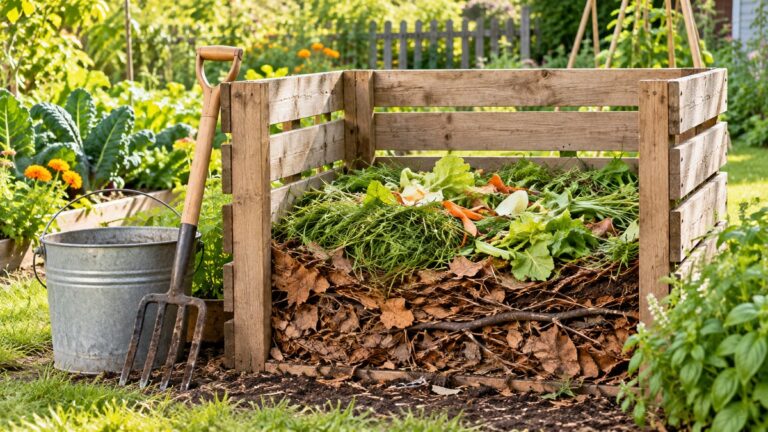
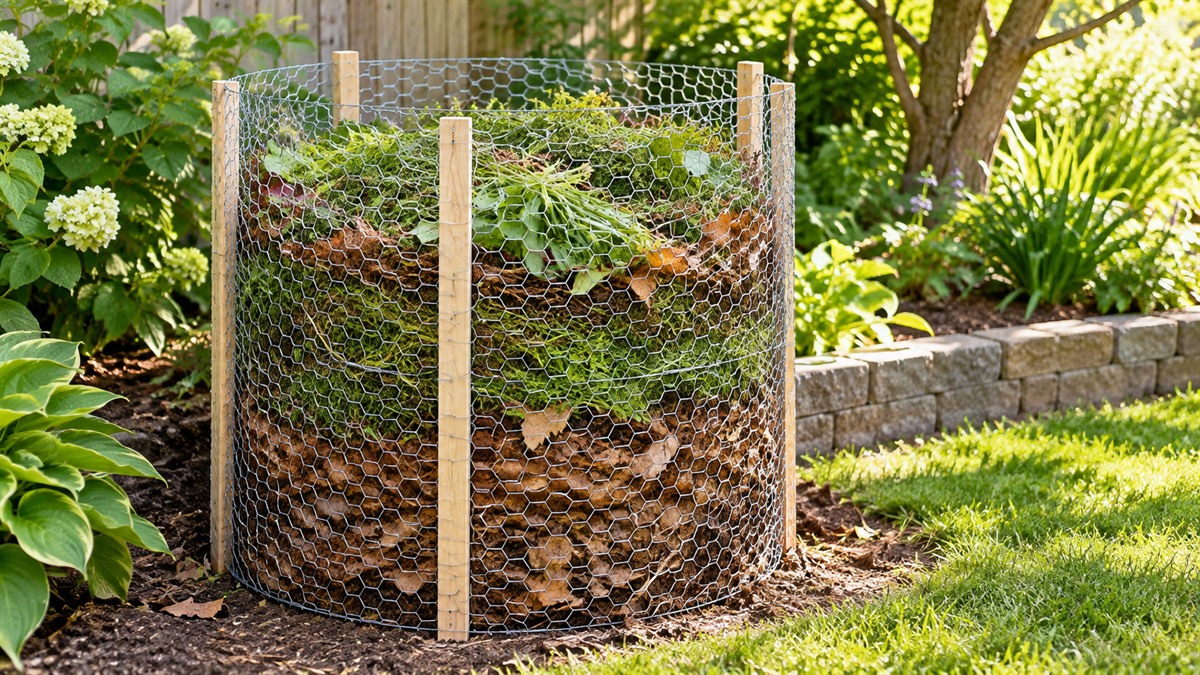
A chicken wire bin is a freestanding ring of poultry netting held in shape by stakes or posts. Air moves through the open mesh, which is the same airflow principle the wire-mesh bins below rely on. A homemade ring has no frame to resist a heavy load of wet leaves, so it tends to bulge and needs bracing as it fills.
This guide does not include a tested build. We did not open a sourced build guide with dimensions or wire specifications for it, so the steps in the next section describe the general method and give no measurements. Treat them as a starting point and check your own space.
How to build a basic chicken wire bin
- Pick the spot. Choose level ground with room to reach the pile with a fork and a hose. Keep it away from the path you use every day.
- Cut the wire. Cut a length long enough to form a ring around the spot, with a little overlap where the ends meet. Measure the ring against the size of pile you expect, not the size of the bag you bought.
- Stand and secure the ring. Drive stakes or posts into the ground at intervals around the ring and fix the wire to them. Join the seam with heavy wire, plant ties, or hog rings so it does not open under weight.
- Fill in layers. Alternate greens such as kitchen scraps and grass clippings with browns such as dry leaves or shredded paper. Keep the pile damp, like a wrung-out sponge, not soaked.
- Turn it. Turn the pile with a fork every few weeks so air reaches the middle. When the ring is full, let it finish, then start a second ring beside it.
A ring like this has no lid. Rain soaks in and animals can get in, so many gardeners add a cover or a second layer of mesh if the pile attracts wildlife. The wire-mesh bins below are also open at the top, so the same issue applies to them.
A sturdier homemade option
If you want a homemade bin that lasts longer than a loose ring, the University of Wisconsin Extension publishes a wood-and-wire design built with 1/2-inch hardware cloth instead of chicken wire. Its frames are 3 feet square, the wire is 36 inches wide, and the bin holds eight to ten 30-gallon bags of yard material. The page says the build needs above-average building skills, and it describes the bin as portable so you can turn the pile by moving it. We did not build it. We cite it only for those stated figures, and you can read the instructions at the source link in the sources section below.
Wire-mesh bins on Amazon
These three bins are the closest ready-made option to a wire enclosure. The figures come from the listing data in our research file, last checked on 2026-10-11. Where two listings disagree, we say so.
1. Large Metal Wire Mesh Compost Bin Outdoor, 172 Gallon, Black
Specs (from the listing, checked 2026-10-11): 172-gallon capacity; 37 x 37 x 30 inches; metal, black. The listing describes a dense grid for airflow, an open top for loading leaves and yard waste, and a plug-in assembly that it says is quick and reusable.
Pros (as the listing describes them): large capacity; powder-coated steel; open top for loading. Cons: the listing does not state the wire gauge or a warranty, and the open top lets rain and animals in.
Best for: a larger yard with a full season of leaves. Skip if: you want a lid or a bin under about 100 gallons.
View on Amazon (affiliate link)
2. Large Wire Compost Bin Outdoor, 160 Gallon, Black
Specs (from the listing, checked 2026-10-11): 160-gallon capacity, stated as 20 cubic feet; heavy-gauge powder-coated steel frame; two size options, 27.56 x 27.56 x 35.43 inches or 35.43 x 35.43 x 27.56 inches. The listing says it sets up in a few minutes.
Pros (as the listing describes them): large capacity; two size options; steel frame. Cons: the listing does not state a wire gauge or a lifespan, and the bin is open at the top.
Best for: a yard where you want to choose between a taller or wider footprint. Skip if: you need a lid or a closed-sided bin.
View on Amazon (affiliate link)
3. Large Compost Bin, 172 Gallon Metal Wire Mesh Composter
Specs (from the listing, checked 2026-10-11): 172-gallon capacity; 37 x 37 x 30 inches; steel with a black finish. The title and bullets describe a rust-proof coating and a plug-in assembly that needs no tools. The listing’s shape field says rectangular, while its stated length and width are equal, so check the shape when the bin arrives.
Pros (as the listing describes them): same 172-gallon capacity as the first bin; rust-proof coating stated in the title. Cons: the listing does not state a warranty, and the open top is not covered.
Best for: a buyer who wants the same capacity as the first bin with an explicit rust-proof claim. Skip if: the shape difference matters to where you plan to put it.
View on Amazon (affiliate link)
Comparison at a glance
| Bin | Listed capacity | Listed size | Material | Lid |
|---|---|---|---|---|
| 172 Gallon Metal Wire Mesh (B0GF6GHBKN) | 172 gallons | 37 x 37 x 30 in | Metal, powder-coated | None listed |
| 160 Gallon Wire Compost Bin (B0DNMP3DXX) | 160 gallons (20 cu ft) | 35.43 x 35.43 x 27.56 in or 27.56 x 27.56 x 35.43 in | Powder-coated steel frame | None listed |
| 172 Gallon Wire Mesh Composter (B0FQTGQCGC) | 172 gallons | 37 x 37 x 30 in | Steel, rust-proof coating | None listed |
The table shows what each listing states. Where a field is blank in the listing, the table says so rather than filling it in.
Worked example: how much a ring holds
Suppose you build a ring 3 feet across and 3 feet tall. That is 27 cubic feet. At 7.48 gallons per cubic foot (our arithmetic, not a listing figure), it holds about 202 gallons when full. The 172-gallon bin listed above is about 23 cubic feet. A ring of that size is therefore a little larger than the bins, but it only holds that much if you fill it to the top and the wire keeps its shape. Settling and compacting shrink a pile, so plan for less than the full volume in practice.
How to choose between a DIY ring and a wire-mesh bin
- Volume first. Estimate the leaves and clippings you produce in a season. A ring you build yourself is limited by the wire you buy and the stakes you can set, while these bins are already sized at 160 to 172 gallons.
- Height and reach. The listed heights are about 27 to 35 inches. Make sure you can reach the middle of the pile with a fork.
- Lid and animals. None of the listings describes a lid. If wildlife is a problem in your yard, plan a cover before you fill the bin.
- Money versus effort. A ring costs less up front but takes time to measure, cut, and brace. A ready-made bin takes less assembly time.
Mistakes to avoid
- Building too small. A ring that fills in a week of raking gives you nothing to finish in a season.
- Letting the pile dry out. An open ring or open-top bin loses moisture quickly in dry weather.
- Skipping the turn. A pile that is never turned stays wet and slow in the middle.
- Assuming the listing says more than it does. Gauge, mesh size, and lifespan are not stated in these listings, so do not assume them.
FAQ
Can a chicken wire compost bin hold a whole season of leaves?
It depends on the size you build. The wire-mesh bins listed above are 160 to 172 gallons. A homemade ring is limited by the length of wire and the stakes you use, so measure the pile you expect before you cut.
Do the wire-mesh bins have lids?
None of the three listings describes a lid. The bins are described as open at the top for loading leaves and yard waste.
How do I keep animals out of an open bin?
The listings do not state any animal resistance. Many gardeners add a cover, or a second layer of mesh, if animals are a problem in their yard.
Which bin has a rust-proof claim?
The third listing states a rust-proof coating in its title. The other two describe powder-coated steel, which the listings present as a finish rather than a rust guarantee.
Conclusion
If you have a small yard and want to test composting cheaply, a chicken wire ring is a reasonable project, measured carefully and braced well. If you need a full season of capacity without building a frame, buy one of the 160 to 172 gallon wire-mesh bins listed above. Before you buy either, read our guides to how to build a compost bin, the best compost bin for a small garden, and a DIY bin from a 5 gallon bucket.
Sources opened for this guide
- Wood & Wire Composter: Do-It-Yourself Compost Bin Instructions, UW–Madison Division of Extension (opened 2026-10-18). Source for the hardware cloth width, frame size, bag capacity and skill level in the sturdier option above.
- Amazon listings for the three wire-mesh bins, from our research file (last checked 2026-10-11). Figures are as stated by each listing and have not been checked against the manufacturer.